Things to Do in Quebec City
North America's last walled city still speaks French and means it
Top Things to Do in Quebec City
Find activities and tours you'll actually want to do. Book through our partners -- no booking fees.


Plan Your Trip
Essential guides for timing and budgeting
Climate Guide
Best times to visit based on weather and events
View guide →Day Trips
The best excursions and nearby destinations worth the journey
Explore day trips →Where to Stay
Best neighbourhoods, hotel picks, and booking tips
Find hotels →Travel Insurance
What's required, what coverage matters, and how to get a quote
Read guide →What to Pack
Climate-specific gear, essentials, and what to leave at home
See packing list →When Should You Visit Quebec City?
Tap a month for weather, crowds, and highlights
View full year-round climate guide →
Your Guide to Quebec City
About Quebec City
Stone speaks first in Quebec City. Climb Côte de la Montagne from the Lower Town and the Haute-Ville ramparts rear up like a slice of Normandy bolted to a cliff above the St. Lawrence River. Suddenly the air smells of woodsmoke and roasting garlic drifting from brasseries along Rue Saint-Jean. This is North America's only fortified city north of Mexico, and it wears the title casually.
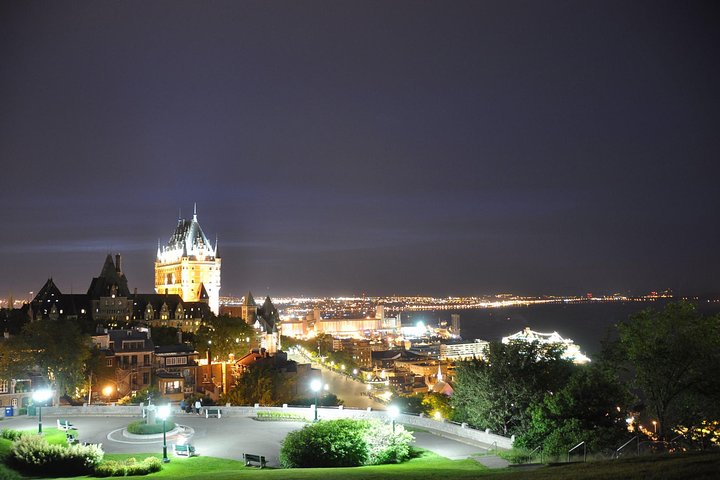
The copper-green towers of Château Frontenac lord over Terrasse Dufferin like a Loire Valley château that strayed north and stayed. Below, in Quartier Petit-Champlain, the continent's oldest commercial street, cobblestones hoard cold until May and maple-butter scent leaks from doorways so narrow you edge in sideways. Quebec City is French the way Marseille is French: raw, stubborn, spoken in joual that trips tourists who learned textbook French.
Linguistic pride runs deeper than outsiders expect. Walk Rue Saint-Jean on a Friday night and accordion and conversation tumble from restaurants where couples share soupe à l'oignon under tin ceilings blackened by decades of kitchen smoke. The honest trade-off is winter. From December through March, temperatures dive and river wind slices through anything lighter than a proper down parka.
Quebec City never apologizes. It stages the planet's biggest winter carnival, floods the Plains of Abraham with ski trails, and hands you caribou, the hot spiced wine, until your cheeks burn for a better reason. Quite possibly the continent's most rewarding cold-weather city.
Travel Tips
Transportation: Upper and Lower Towns link via a funicular beside Château Frontenac. In winter, use it. The Breakneck Stairs live up to their name on icy mornings. Old Quebec inside the walls is compact enough to cross on foot in an afternoon. Yet the wider city relies on the RTC bus network. Buy an Opus card at any dépanneur to avoid fumbling for exact change. The real hack is the Lévis ferry. It crosses the St. Lawrence year-round and delivers the city's best skyline view for a fraction of what tour boats charge. Download the RTC app before you land. It tracks buses live. Paper schedules at stops are optimistic.
Money: Canadian dollars only. Quebec City is not Montreal. Smaller shops in the old quarters sometimes stare at US bills. Withdraw from a Desjardins ATM. They are everywhere and charge far less than the exchange kiosks on Rue Saint-Louis that feed on cruise-ship crowds. Tipping follows standard North American rules, though some restaurants now print a suggested-gratuity line set higher than you might expect. Tap-to-pay works almost everywhere, down to the market stalls on Place Royale. Eat where the Université Laval students eat in Saint-Roch. Portions are larger and the tab is lighter than anything inside the walls.
Cultural Respect: Open with Bonjour. Even a shaky attempt at French before you switch to English flips the mood. Québécois are proud of their language, and the politics behind it run deep enough that every sign, menu, and government document is French-first by law. Most service workers inside Old Quebec speak English. But step into Limoilou or Saint-Sauveur and you will need basic French or cheerful gestures. Church etiquette matters more than you might expect in a city with a cathedral every few blocks. Cover your shoulders, lower your voice, and skip selfies during services at the Basilique-Cathédrale Notre-Dame de Québec. Jaywalking, oddly, is taken more seriously here than in Montreal. Locals wait for the signal.
Food Safety: Tap water in Quebec City is clean and cold. Order it freely. The smart move is knowing what is real. Poutine varies wildly. The authentic plate arrives with brown gravy and fresh cheese curds that squeak against your teeth. Anything topped with shredded mozzarella is wearing a costume. For the full Québécois primer, drive to a cabane à sucre outside the city. These sugar shacks serve tourtière with a crust that shatters, cretons spread thick on bread, and tire d'érable, maple taffy poured onto packed snow and rolled onto a popsicle stick. In town, Rue Saint-Jean packs the densest restaurant row. But the sharper locals eat in Saint-Roch. Chefs who trained in Old Quebec opened their own kitchens there, and rents are kinder.
When to Visit
Quebec City wears two faces. Summer is the postcard everyone buys. Winter is the secret locals guard. Your choice hinges on cold tolerance and crowd patience. June through August earns its fame. Days settle at 22 to 27°C (72 to 81°F). Terraces along Rue Saint-Jean overflow by noon. July's Festival d'été hauls in over a million visitors.
Eleven days of outdoor concerts turn the whole city into a stage. The catch hurts. Hotel rates leap 40 to 60 percent above shoulder season. Old Quebec's lanes crawl behind cruise-ship platoons. A decent Petit-Champlain table demands a week's notice. If summer is your only slot, target the last two weeks of June. Festival mobs haven't landed.
School buses have left. September and October are simply smarter. Temperatures linger between 10 and 18°C (50 to 64°F). Hardwood forests flare copper and vermillion. New England color minus New England prices. Hotel rooms open up. Île d'Orléans, twenty minutes east, peaks now. Apple orchards draw. Roadside cider presses drip juice that still smells of cold storage.
The tradeoff: rain increases. Late October daylight shrinks fast. November is grey, raw, and betwixt. The city lingers between brown leaf and first real snow. Skip it unless solitude and rock-bottom rates seduce you. December through February is Quebec City unmasked. Temperatures routinely hit minus 15 to minus 25°C (5 to minus 13°F).
Snow muffles everything. Your boot crack echoes like gunfire. Late January through mid-February belongs to Carnaval de Québec. The city borders on hallucination. Ice palaces glow from within. Night parades roll down Grande Allée. Canoe teams race across drifting St. Lawrence ice. Bonhomme Carnaval presides like a jolly monarch.
Hotel rates increase during Carnaval weeks. The rest of winter stays surprisingly cheap. Budget travelers win, provided they dress for it. You must dress for it. Wind along Terrasse Dufferin hunts every gap in your armor. March through May is mud season. Snow retreats in grimy stages. Streets run brown. The city looks exhausted.
Locals forgive it. April can still unload full snowstorms. Late May brings cautious optimism. First terraces reopen. Lilacs bloom along the fortifications. Quebec City stretches after winter like a bear distrusting the thaw. This is the cheapest window of the year. Grey skies and slushy sidewalks await. Rewards: the Citadelle and Château Frontenac corridors nearly empty.
More Ways to Experience Quebec City
Tours, day trips, and local experiences curated by on-the-ground operators.
Didn't see anything interesting yet?
Browse Viator's full catalog of tours, day trips, food experiences, and private guides in Quebec City.
See All Quebec City Tours on Viator